Trust is the new checkout
 Boluwatife Akinade, Head of Product ·
When a person shops, they judge a business by feel: the design, the reviews, a gut sense. When an agent shops for a person, there is no gut. It decides on evidence.
That changes what a business has to be good at. Trust used to be a feeling. It is becoming something you can show.
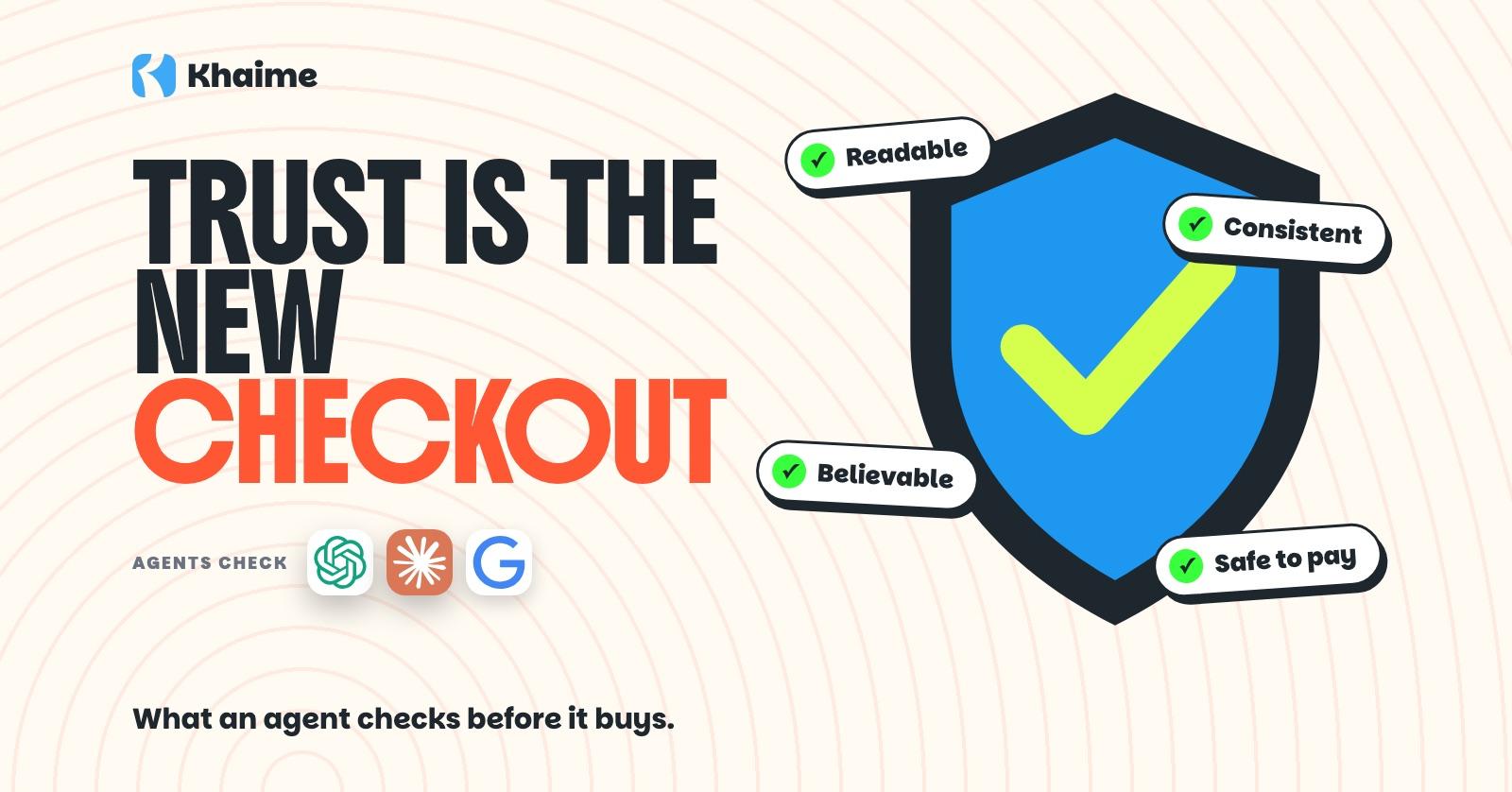
What an agent checks
- Can I read it? Clear products, prices and availability, written so a machine can understand them.
- Do the details agree? The same name, address and terms everywhere, not contradicting each other.
- Is the promise believable? Delivery windows, return rules and reviews that match reality.
- Is the payment safe? A flow that confirms the order and the amount, and leaves the final approval to the human.
- Does it deliver? A record of orders actually fulfilled.
An agent hands its owner one answer. If that answer goes wrong, the agent loses trust. So it chooses the business it is least likely to regret.
Trust signals agents can use
- Consistency. Facts that match across your site, profiles and listings.
- Specificity. "Ships in 2 to 4 days" beats "fast delivery".
- Reviews with substance. Real customers describing real orders.
- Clear policies. Returns, refunds and contact details a person could act on.
- Fulfilment history. A pattern of orders that arrived as promised.
The human stays in charge
The best systems will not let an agent spend freely. The shopper sets the limits and approves the payment. Businesses that make this simple and clear will be preferred by both agents and people.
That means checkouts that show exactly what is being bought, the exact amount and what happens next, in plain words. A confusing checkout is a bad experience for a person and a red flag for an agent.
Trust is built order by order
Keep availability honest. Answer questions the same way every time. Deliver what you said you would. Handle problems openly. None of it is flashy, and all of it compounds, because every good order becomes evidence for the next agent that looks.
A trust checklist
- Read your own product pages as a stranger would. Is anything missing or unclear?
- Make sure price, stock and delivery information are current.
- Write down your returns and refund policy in one place.
- Check that your details match across every site and profile.
- Ask for reviews after delivery, and respond to them.
- Test your checkout from start to finish.
How Khaime helps
Khaime businesses are built to be readable by AI agents, with clear catalogue data and a checkout that shows the order and amount. Merchants see which sales began with an agent, and a discoverability score points out what to fix. Khai, our AI agent, keeps answers consistent with what the merchant has set. A store is part of it, by the way, but trust is the product.
Common questions
Can I fake trust signals?
Not for long. Agents lean on consistency across many places, and inconsistencies are easy to spot.
Do new businesses have a disadvantage?
Less history means fewer signals, so clarity matters even more. Clear facts and honest terms give a new business a fair start.
What if a customer is unhappy?
Handle it openly and quickly. A well-handled problem can build more trust than a flawless run.
Does a good design still matter?
Yes, for people. For agents, clear information matters most. Do both.
The short version
- Agents decide on evidence, not feel.
- They look for readable, consistent, believable and safe businesses.
- The human stays in charge of the final approval.
Commerce that
runs itself.
Get your business ready for AI agents. They can find it, understand it and pay for it, and Khai answers your customers while you sleep.